


 0
0


Skincare vs In-Clinic Treatments for Sagging Skin: What Works at Every Depth
Search “how to tighten sagging skin” and you will find hundreds of products promising to lift and firm. Some are backed by solid science, and a good skincare routine is the foundation of any plan for ageing skin. But skincare and in-clinic treatments such as HIFU (high-intensity focused ultrasound) work at very different depths, and knowing what each does best helps you build a routine that delivers real, lasting results.
Why skin loses firmness
Skin laxity develops at several depths at once. In the dermis, collagen production slows from our mid-20s onwards and elastin fibres gradually lose their spring. UV exposure activates enzymes that break down collagen faster, a significant factor in Singapore’s year-round sun. Deeper down, the SMAS layer, a sheet of connective tissue that supports the face, gradually loosens, and the facial fat pads shift downward. Hormonal changes around menopause add a further step, with skin collagen falling by up to 30% within five years.
Only some of these changes happen in the upper layers of the skin. This is why the most effective approach combines what skincare does well with what in-clinic treatment can reach.
What skincare does best
Sunscreen: the most effective anti-ageing product you own
A well-known randomised trial in Australia found that adults who used broad-spectrum sunscreen daily showed 24% less measurable skin ageing over four and a half years than those who used it occasionally. Sunscreen preserves the collagen you have and protects the results of any treatment you invest in. It is the single most important step in any routine.
Retinoids: the best-evidenced topical for collagen
Retinoids, including prescription tretinoin and over-the-counter retinol, are the only class of topical ingredient with strong, repeated evidence of increasing collagen in the dermis. Studies show they boost collagen type I production and reduce the collagen-degrading enzymes triggered by UV. With consistent use over three to six months, this translates into smoother texture, softer fine lines and a subtle improvement in firmness. Prescription-strength retinoids are considerably more potent, and our doctors can help you find a strength and routine your skin tolerates well.
Vitamin C and peptides: valuable supporting players
Topical vitamin C supports collagen synthesis and neutralises the free radicals generated by UV, with reasonable evidence for improving signs of photoaging when well formulated. Peptides, short chains of amino acids that signal skin cells to produce collagen, have early evidence for modest improvements in firmness. Both are worthwhile additions alongside sunscreen and a retinoid.
Where in-clinic treatment takes over
Topical ingredients act primarily on the epidermis and upper dermis, which is where they improve texture, tone, hydration and fine lines. The deeper structural support of the face, in the deep dermis and the SMAS layer, calls for a different tool.
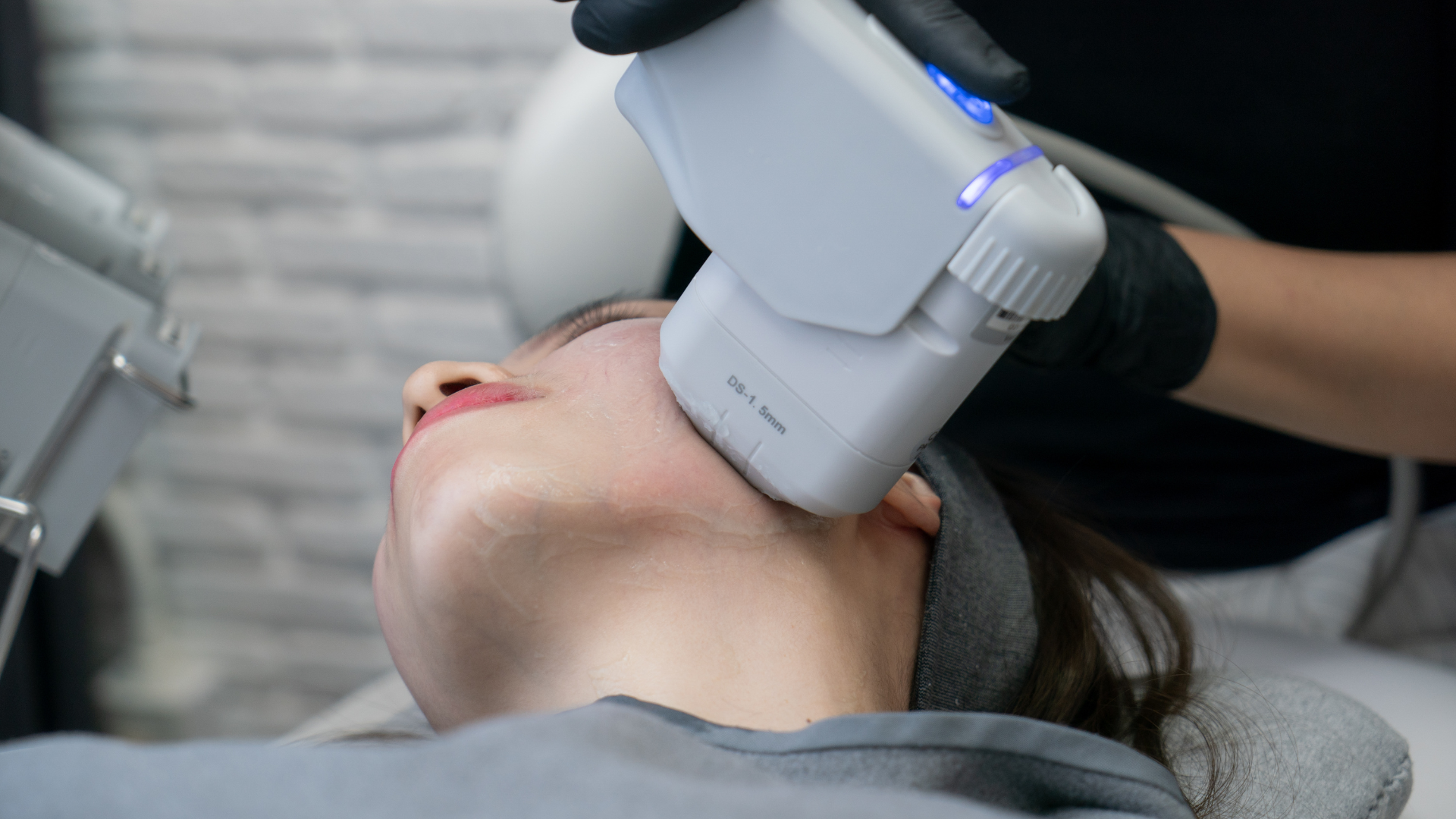
This is where energy-based treatments come in. HIFU delivers focused ultrasound energy to precise depths, including the SMAS layer at approximately 4.5 mm, the same layer a surgeon tightens during a facelift, and it is the leading non-surgical treatment that targets this layer directly. At each focal point, tissue is briefly heated to around 60 to 70°C, causing existing collagen to contract and triggering the body to produce new collagen and elastin around each treated zone, all while leaving the skin surface untouched. Histological studies have confirmed increased dermal collagen after treatment, and clinical trials show the majority of patients with mild to moderate laxity achieve measurable improvement in brow, cheek and jawline position, with results developing over three to six months and typically lasting around a year.
The difference is one of scale and depth: a retinoid gently supports collagen in the upper dermis every day, while HIFU creates a defined stimulus at depth that produces a substantial remodelling response.
The best results come from both
Skincare and in-clinic treatment are not competing options. They work together:
• Sunscreen and a retinoid protect and improve the surface, slow collagen loss and keep skin quality high, so the lift you achieve in clinic lasts longer
• HIFU and similar treatments address the deeper structural laxity that topicals cannot reach
• Fillers or collagen-stimulating injectables can restore lost volume where needed, completing the picture
Patients who maintain a consistent skincare routine consistently see better and longer-lasting results from HIFU, because their skin is in optimal condition to respond.
Which stage are you at?
Skincare is a great starting point if you are in your 20s or early 30s and your main concerns are texture, tone or fine lines. It is worth adding HIFU when you notice a softening jawline, flatter cheeks, a heavier brow, or loosening skin under the chin, or if you have been using a retinoid and sunscreen consistently and would like to take firmness to the next level. Where laxity is more established, a combination of HIFU with volume and skin quality treatments gives the most complete, natural-looking result.
Find out what your skin needs
The most useful step is an assessment. At Singapore Aesthetic Centre, our doctor will examine your skin, identify what is driving the changes you are seeing, and design an evidence-based plan, from optimising your daily routine to HIFU and other treatments that will make a real difference. Book a consultation to get started.