


 0


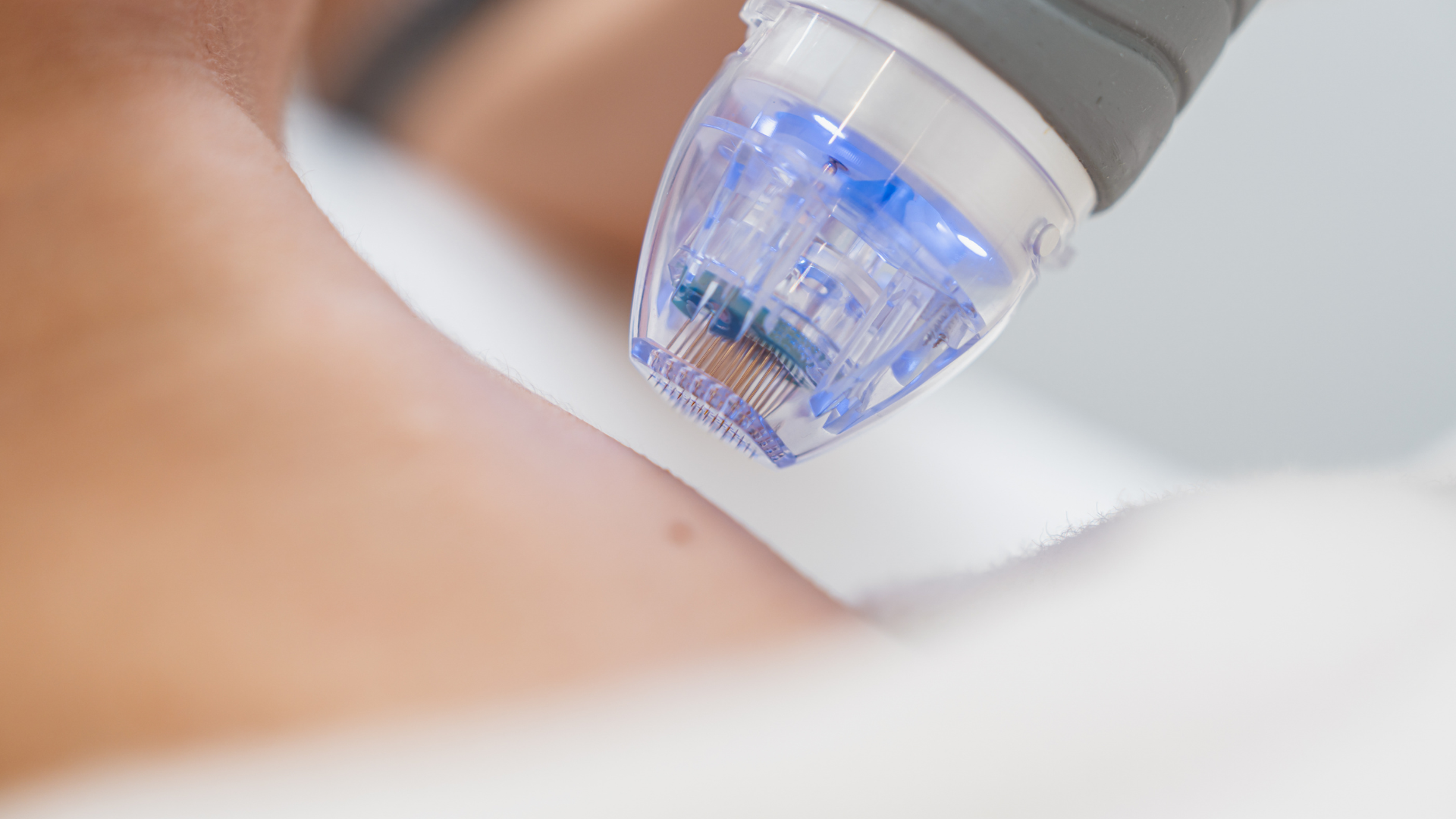
RF Microneedling: A Beginner’s Guide
If you have been researching treatments for acne scars, enlarged pores or skin that is starting to lose its firmness, chances are you have come across RF microneedling. It is one of the most widely used collagen-stimulating treatments in medical aesthetics, and is backed by a growing body of clinical research. Here is everything you need to know before you start.
What is RF microneedling?
RF microneedling combines two established techniques:
• Microneedling: very fine needles create thousands of tiny, controlled channels in the skin.
• Radiofrequency (RF) energy: a form of energy that gently heats the tissue.
In RF microneedling, the RF energy is delivered through the needles themselves, directly into the dermis. This is the deeper layer of skin where collagen and elastin, the proteins that keep skin firm, smooth and elastic, are made.
How does it work?
The treatment creates small, controlled zones of heat and micro-injury beneath the skin, surrounded by untouched healthy tissue. Your skin responds the way it does to any minor injury: it repairs itself. As part of that repair, it produces new collagen and elastin.
The heat also causes existing collagen fibres to contract slightly, which is why some people notice a subtle tightening early on. The more meaningful improvement comes later, as new collagen gradually builds up and strengthens the skin from within. Studies examining skin samples after treatment have confirmed increased collagen and elastin in the treated areas.
Why combine needles and heat?
Each part of the treatment adds something the other cannot do on its own.
• Compared with microneedling alone, adding heat creates a stronger stimulus for collagen production and allows the deeper layers of skin to be treated more precisely.
• Compared with many resurfacing lasers, RF microneedling delivers its energy beneath the surface rather than across it. This leaves most of the outer skin intact, which generally means shorter recovery and a lower risk of pigmentation. This is one reason it is often a good fit for Asian skin.
• The depth can be adjusted. Your doctor can tailor the needle depth and energy to your skin’s thickness, the area being treated and your concern.
What can it treat?
RF microneedling is most commonly used for:
• Acne scars, particularly rolling and boxcar scars
• Enlarged pores
• Rough or uneven skin texture
• Fine lines
• Mild to moderate skin laxity
It can be used on the face, neck and some body areas.
Who is it suitable for?
RF microneedling tends to suit people who want to improve the quality and firmness of their skin without surgery, and who are comfortable with a gradual result. It can be used on a wide range of skin types.
It may not be suitable, or may need to be postponed, if you:
• Are pregnant or breastfeeding
• Have an active infection, cold sore or acne flare in the treatment area
• Have a pacemaker or other implanted electronic device
• Have a history of keloid scarring
• Have recently taken oral isotretinoin for acne
What happens during a treatment?
Every treatment starts with a consultation, where your doctor assesses your skin, discusses your goals and reviews your medical history. On the day, a numbing cream is applied for comfort. The treatment itself usually takes around 30 to 60 minutes, depending on the area. Most people describe the sensation as warmth, prickling or pressure.
For what to expect after your session, read our guide to RF microneedling downtime and aftercare.
How many sessions will I need?
Most concerns respond best to a course of treatments spaced several weeks apart, as each session builds on the collagen produced by the last. The number you need depends on your concern, its severity, your age and how your skin responds. Results develop gradually over the following months, as new collagen forms.
What it can’t do
RF microneedling can improve skin quality and mild to moderate laxity, but it is not a substitute for a facelift in cases of significant sagging. It also does not restore lost volume. Where these are concerns, your doctor may recommend other treatments alongside it, or instead. The right combination is decided during an assessment.
Is RF microneedling right for you?
The best results start with an accurate assessment of your skin. At Singapore Aesthetic Centre, our doctor will look at your concerns, skin type and medical history to recommend a plan that suits you. Book a consultation with us to find out if RF microneedling is right for your skin.